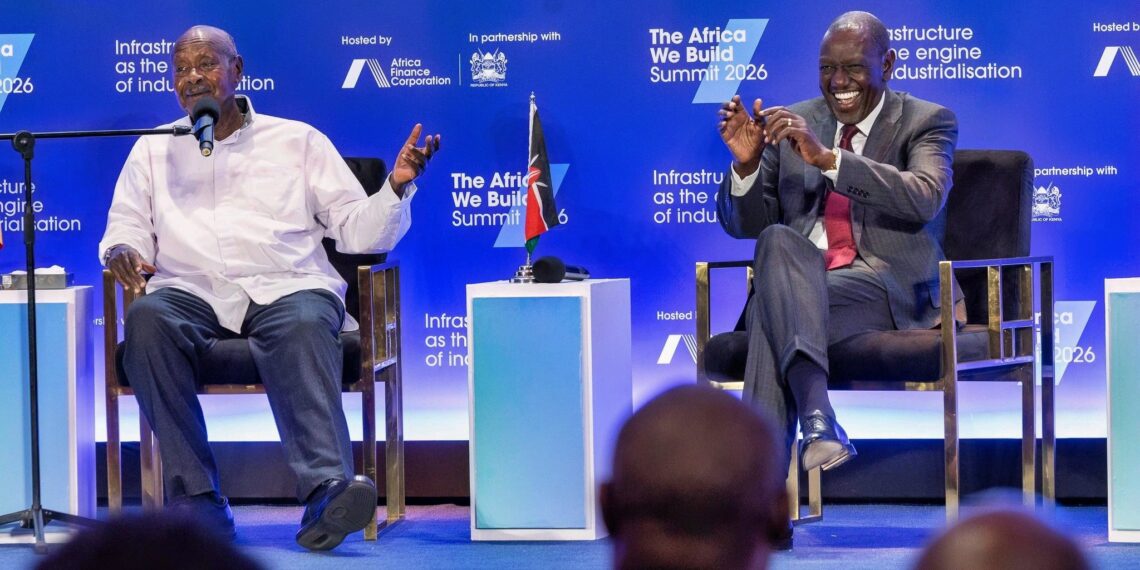
A new phase of energy cooperation is taking shape in East Africa, as William Ruto and Yoweri Kaguta Museveni signal a deeper alignment aimed at reducing the region’s dependence on imported fuel.
Speaking at the Africa We Build Summit 2026 in Nairobi, Ruto framed Kenya’s planned investment in Uganda’s oil refinery not just as a bilateral deal, but as part of a broader push to reshape Africa’s energy future. The initiative reflects a growing recognition among African leaders that exporting crude while importing refined fuel is economically unsustainable.
Rather than focusing on past delays, both leaders emphasized future opportunities. Uganda’s long-running refinery project—first conceptualized after oil discoveries in 2005—has faced setbacks tied to financing challenges and disagreements with international oil firms. However, Museveni made clear that Uganda’s insistence on domestic refining is rooted in long-term strategy, not short-term profitability concerns.
The evolving partnership also builds on earlier moves, including Uganda’s investment through the Uganda National Oil Company in the Kenya Pipeline Company. That deal positioned Uganda as a major stakeholder in Kenya’s fuel transportation network, strengthening cross-border integration in the petroleum supply chain.
Now, Kenya’s willingness to reciprocate by backing Uganda’s refinery suggests a more coordinated regional model—where infrastructure, investment, and resource management are increasingly shared. Analysts view this as a strategic pivot toward collective energy security within the East African Community.
Museveni also highlighted Uganda’s broader oil potential, noting that current production zones represent only a fraction of the country’s reserves. Combined with infrastructure like the East African Crude Oil Pipeline, the refinery is expected to anchor a regional energy ecosystem that could serve neighboring countries including the Democratic Republic of Congo and South Sudan.
For Ruto, the urgency is continental. Africa continues to export millions of barrels of crude daily while spending tens of billions annually importing refined products. He argued that this imbalance exposes the continent to global shocks and limits economic growth.
The Kenya–Uganda initiative, therefore, is being positioned as more than a partnership—it is part of a broader effort to industrialize Africa’s energy sector, retain value within the continent, and build resilience against global market disruptions.