The government has announced plans to work with key players in the housing and financial sectors to develop affordable mortgage products for low-income earners as part of efforts to reduce Uganda’s estimated housing deficit of 2.4 million units.
The Minister of Lands, Housing and Urban Development, Ms Judith Nabakooba, said the current mortgage market remains inaccessible to the majority of Ugandans because of high lending rates ranging between 16 and 22 percent.
She said government wants to redesign housing finance to cater for ordinary workers, including boda boda riders, market vendors, casual labourers and young professionals, who are currently locked out of home ownership.
“The housing mortgages available today are affordable for senior government officials and people with established businesses. We now want to plan for low-income earners like boda boda riders, market vendors and those starting from scratch,” Nabakooba said.
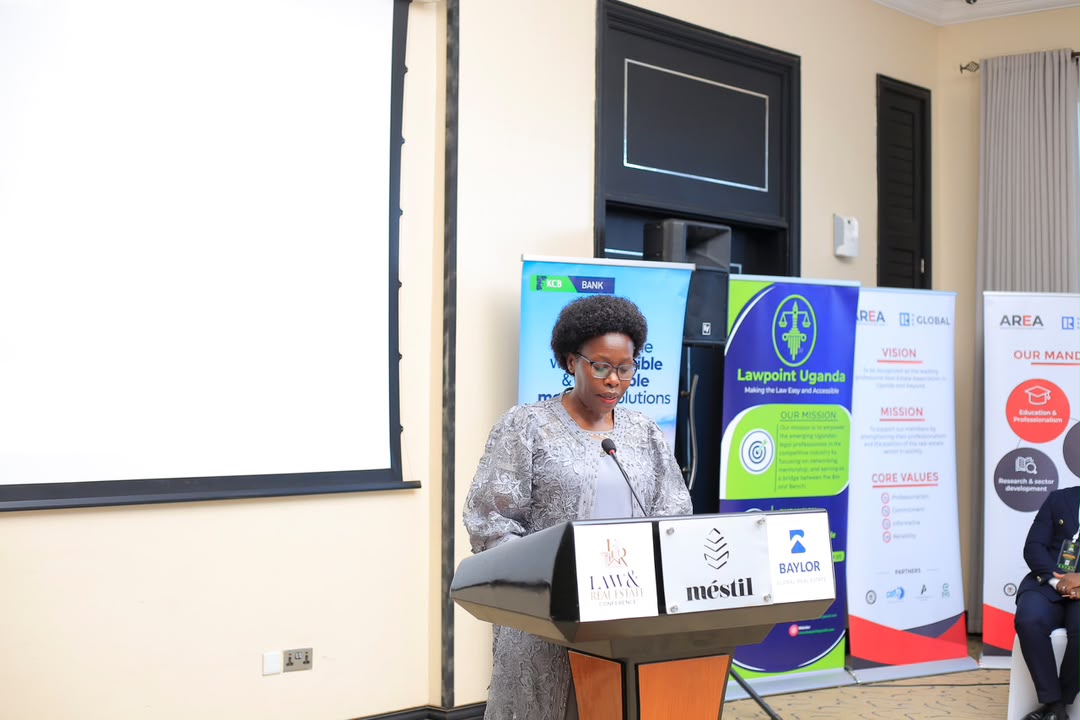
She made the remarks while officiating at the first Law and Real Estate Conference organised by Global Real Estate at Mestil Hotel in Kampala yesterday. The conference was held under the theme, “Bridging Law and Real Estate for Sustainable Growth.”
Daily payment model
The minister said government is encouraging mortgage financing institutions and developers to introduce flexible repayment plans that reflect the earning patterns of low-income households.
According to her, many Ugandans can afford to save between Shs5,000 and Shs10,000 a day but fail to qualify for conventional mortgage products because they lack formal monthly incomes.
“We need mortgage programmes that accommodate people who can only manage between Shs5,000 and Shs10,000 daily. Such arrangements can enable many Ugandans to own decent homes,” she said.
She also proposed long-term housing schemes for fresh university graduates, arguing that many complete their studies only to struggle with rising rental costs before establishing themselves financially.
“Many of our children complete school at about 25 years. Renting is becoming expensive. Why not allow them to own homes while paying affordable instalments over 20 years or even longer?” she asked.
Uganda’s housing shortage has continued to widen amid rapid urbanisation, population growth and rising construction costs, leaving affordable housing beyond the reach of many households.
Real Estate Bill
Beyond affordable housing finance, Ms Nabakooba said government is fast-tracking the proposed Real Estate Bill, which she expects Parliament to pass before the end of the current financial year.
She said the legislation will introduce minimum professional standards for real estate practitioners, require licensing of dealers and strengthen regulation of the property industry.
“Today someone wakes up and starts selling houses without a licence. Once this Bill becomes law, it will regulate all real estate dealers and professionalise the industry,” she said.
She added that the law is expected to minimise fraud, improve accountability and protect buyers involved in high-value property transactions.
Land fraud
The minister acknowledged that land conflicts, duplicate and overlapping land titles, fraudulent estate management and prolonged court cases continue to undermine confidence in Uganda’s real estate sector.
To address the challenge, she said President Museveni directed the Ministry of Lands to migrate the national land registry to blockchain technology to improve the security and authenticity of land records.
She said the digital system is expected to reduce fraud, strengthen land administration and lower the cost of doing business.
Ms Nabakooba also credited existing laws, including the Condominium Property Act, Succession Act, Landlord and Tenant Act, Building Control Act and Valuation Act, for improving regulation and promoting orderly growth in the property sector.
The Condominium Property Act, she noted, has particularly expanded apartment ownership by allowing individuals to own separate units within the same building while sharing common facilities.
Industry response
Global Real Estate Managing Director Ms Fridaus Nambi said the conference had created a platform for lawyers, developers, financiers and policymakers to discuss reforms needed to improve Uganda’s real estate industry.
“We have many enactments already in place and more amendments coming. These conversations help us understand how we can improve the industry and ensure all stakeholders move together,” Ms Nambi said.
She expressed optimism that recommendations from the conference would contribute to a more transparent, professional and sustainable real estate sector capable of supporting increased investment and expanding access to affordable housing.