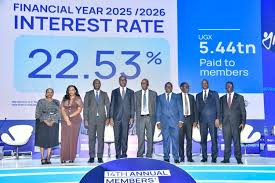
NSSF reported that assets under management increased from about Shs26 trillion to Shs32.8 trillion, while member contributions rose to Shs2.42 trillion in FY2025/26.
The Fund had earlier reported total income of about Shs6.5 trillion, representing an 85% increase from the previous financial year.
The 22.53% rate means NSSF members will see a substantial increase in the value of their accumulated savings, with the actual amount credited depending on each member’s qualifying balance.
NSSF managing director Patrick Ayota attributed the Fund’s performance to the growth of the economy, strong performance of stock markets in East Africa where the Fund has invested, and appreciation of regional currencies against the Uganda shilling, among other factors.
The latest return comes as NSSF pursues an ambitious expansion plan under its 10-year strategy, targeting 15 million active members by 2030 and assets of Shs50 trillion, before growing them to Shs80 trillion by 2035.
However, the Fund’s growing financial muscle also attracted calls for greater participation in national development.
Gender, Labour and Social Development Minister Henry Tumukunde challenged the NSSF board and management to ensure that the Fund’s growing value—estimated at about $9 billion—is reflected in the country’s development agenda.
“This money should be turning around the economy. It must change the economy!” Gen Tumukunde said.
He urged the Fund to abandon what he described as a “parastatal style” of management and adopt a private-sector approach, including recruiting and retaining staff based on competence rather than academic qualifications.
“If you see someone not performing to your expectations, just let them go,” he said.
The minister also challenged the board on whether the Fund was obtaining the best possible returns from its investments.
Mr Ayota earlier listed several government infrastructure projects that NSSF is expected to finance, including the proposed Kampala-Jinja Expressway.
NSSF Board chairman David Ogong, however, said the Fund’s investment options were constrained by the law, despite its growing pool of investable resources.
The Fund has also been pushing to expand coverage, particularly among employers who do not remit contributions for their workers.
Mr Musasizi commended NSSF’s investment in government programmes and said the Finance ministry would continue supporting the Fund to strike a balance between investing in national development and creating value for members.
Meanwhile, Gen Tumukunde warned employers who default on NSSF contributions that the government would move against their businesses.
He said defaulting employers could be recommended for deregistration and have their trading licences revoked.
NSSF’s latest declaration comes at a time when the Fund is seeking to widen coverage beyond the formal workforce while growing its investment portfolio to support higher returns for members.