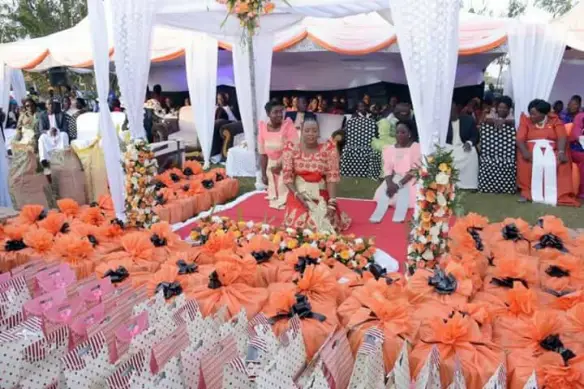
Buganda Kingdom is pushing for a return to the traditional spirit of Kwanjula, with Katikkiro Charles Peter Mayiga warning families against turning marriage introduction ceremonies into expensive spectacles dominated by cash-spraying, excessive dancing and competition over wealth.
Mayiga said the growing tendency to use Kwanjula ceremonies to showcase money and social status risks overshadowing the cultural purpose of an occasion that was traditionally centred on bringing two families together.
The Katikkiro made the remarks on Saturday while speaking at the Kwanjula ceremony of Roberta Nalwoga and Hillary Murungi.
According to Mayiga, there is nothing wrong with celebrating a Kwanjula with happiness and excitement, but guests should not go overboard in an attempt to attract attention.
“Kwanjula is a day of happiness. We don’t want sad faces on such occasions, but we also don’t want to see people who make a nuisance of themselves with Gomesis and Kanzus flying around. Those obnoxious dancing boys, we don’t want to see them,” he said.
He particularly took issue with the practice of guests pulling out large amounts of money and throwing it around during the ceremony.
“We don’t want to see people splashing money, that is backward. If you have money we shall know, even if you don’t throw it around. A rich man is known, even if they try to hide,” Mayiga said.
He questioned the logic behind displaying bundles of cash at the home of one’s in-laws.
“But how can someone at your in-laws’ pull out wads of cash and throw it?” he asked.
Mayiga’s concerns come at a time when Kwanjula ceremonies have evolved significantly from the relatively modest family gatherings associated with the tradition.
Kwanjula, meaning “introduction” in Luganda, traditionally provided an opportunity for the groom and his relatives to formally visit the bride’s family, declare their intention to marry and fulfil agreed cultural obligations.
The ceremonies were generally small, with traditional accounts indicating that a groom could arrive with about 15 to 20 relatives and friends.
Rather than large venues and elaborate entertainment, many ceremonies were held at the family home and focused on cultural rituals and the formal relationship between the two families.
The customary requirements were also relatively simple. They included symbolic gifts, clothing for members of the bride’s family and the omutwalo, or bride price.
Other traditional items included a hoe, fruit seedlings and calabashes of local brew, reflecting the cultural importance attached to family, agriculture and community.
Today, however, many Kwanjula ceremonies have become major social events, sometimes attracting hundreds of guests and involving significant spending on decorations, entertainment, transport, clothing and gifts.
Families may present furniture, household appliances, livestock and other expensive items, while elaborate outfits and multiple changes of clothing have become common features.
The gomesi remains an important part of the ceremony, although modern designs increasingly include embroidery, sequins, customised patterns and expensive accessories.
For Mayiga, the concern is not about modernising the ceremony, but ensuring that changes do not completely overshadow its cultural foundation.
The Katikkiro’s remarks are part of a broader campaign by the Buganda Kingdom against the commercialisation of traditional marriage ceremonies.
In 2021, Mayiga warned that the rising cost of Kwanjula and wedding ceremonies was making marriage appear unnecessarily expensive and could discourage young people from formalising relationships.
He argued that some of the items and practices now regarded as compulsory at ceremonies were not part of the original Buganda cultural requirements but were additions that developed over time.
Mayiga also criticised the influence of cash-spraying, linking it to the Nigerian practice of “spraying” money during weddings and other celebrations.
He said Uganda should not embrace practices that have faced legal restrictions in Nigeria.
“This behaviour originated in Nigeria, but now that country has banned these practices. If they catch you throwing money like that they will imprison you. We therefore don’t want to see that backward behaviour here,” he said.
His message is therefore less about stopping people from celebrating and more about changing what the celebration represents.
For Buganda Kingdom, the ideal Kwanjula should remain a joyful and dignified occasion where families formally unite, rather than a competition over who can spend the most money, wear the most elaborate outfit or command the biggest crowd.