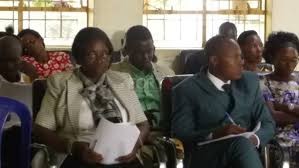
Residents of Kabarole District have expressed mixed reactions following a district council resolution proposing the division of Burahya County into three parliamentary constituencies.
The Kabarole District Council passed a resolution early this month to split Burahya into Burahya North, Burahya Central, and Burahya South. The motion was moved by John Amanyire Kasweta, councillor representing Hakibale Sub-county, who argued that the constituency has grown too large to allow for effective political representation and service delivery.
Kasweta told the council that the increasing population and expansive geographical coverage have made it difficult for a single Member of Parliament to adequately engage communities and respond to their concerns.
He maintained that subdividing the constituency would enhance accessibility to leadership, strengthen the mobilisation of government programmes, and unlock additional development opportunities through increased constituency funding.
Under the proposal, Burahya South would comprise Kasenda Town Council, Kasenda Sub-county, Ruteete Sub-county, Kiko Town Council, and Busoro Town Council. Burahya Central would include Mugusu Town Council, Mugusu Sub-county, Karangura Sub-county, Kicwamba Sub-county, and Harugongo Sub-county. Meanwhile, Burahya North would cover Rwengaju Sub-county, Hakibale Sub-county, Kibasi Town Council, Kijura Town Council, and Kabende Sub-county.
However, reactions from residents reveal a divided opinion. Stephen Kyaligonza, a resident of Kicwamba Sub-county, welcomed the proposal, noting that the current size of the constituency limits effective service delivery. He said creating smaller constituencies would bring services closer to the people and improve responsiveness. Kyaligonza added that the creation of new administrative units under the proposed constituencies could generate employment opportunities for residents.
Robert Musobozi shared similar sentiments, arguing that some areas are often left behind during the rollout of government programmes due to the vastness of the constituency. He said the proposed split could help ensure more balanced development and elevate fast-growing centres such as Kihondo Trading Centre to higher administrative status, including a town council.
On the other hand, Gertrude Atugondeze, another resident, cautioned that residents are more concerned about tangible service delivery than political restructuring. She emphasised the need for improved road networks, better-equipped schools, consistent drug supplies in health facilities, and fair prices for agricultural produce, regardless of whether the constituency is divided or not.
Similarly, Richard Mugisa expressed scepticism, arguing that the creation of new constituencies often benefits political actors more than ordinary citizens.
Peter Byakuyamba, the Programs Manager at Tooro Civil Society Organizations Network (TooroNet), acknowledged that while creating new administrative units is not inherently problematic, the timing and intent of the proposal raise questions. He noted that the issue surfaced shortly after the January general elections and was neither a prominent campaign issue nor reflected in voters’ memoranda.
Byakuyamba urged leaders to prioritise service delivery and economic empowerment, particularly through improved healthcare, access to clean water, better road infrastructure, functional markets, and value addition for agricultural produce. He added that with new leaders already elected, the immediate focus should be on addressing household income challenges and improving livelihoods.
The proposed subdivision will require approval from Parliament, the Ministry of Local Government, and the Electoral Commission before it can be implemented.