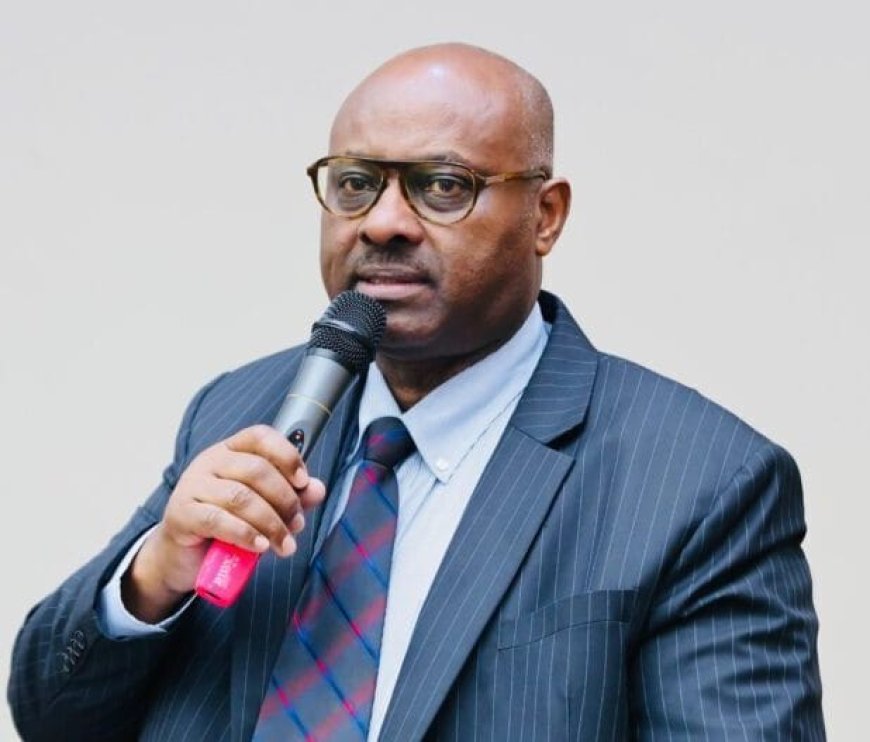
The Permanent Secretary in the Ministry of Local Government, Ben Kumumanya, has challenged newly elected leaders to take full control of their budgets and demand better roads for their communities.
Speaking during an induction exercise for council leaders in Makindye-Ssabagabo Municipality, Kumumanya credited President Yoweri Museveni’s administration for advancing a decentralisation system that empowers grassroots citizens to shape their own development priorities.
He explained that decentralisation was intentionally designed to shift administrative power closer to the electorate, giving them a direct say in local roads, schools, healthcare, and public services.
Kumumanya urged the elected representatives to act as true advocates for their constituents by demanding transparency and prioritizing public spending where it is needed most.
“Let us have the opportunity to determine our destiny. It is very important not to let anyone make decisions on things that affect us,” Kumumanya said.
He noted that for decentralisation to function effectively, local councils must take full ownership of identifying community priorities, approving operational budgets, and enforcing project oversight.
“Sit in councils, approve your budgets, approve your projects, and let people develop their own structures,” he added. Tracing the origins of Uganda’s decentralised governance framework back to the reforms initiated under President Museveni in 1987, Kumumanya noted that extensive national consultations laid the groundwork for modern local administration.
Reflecting on the nation’s post-independence history, he observed that local governance successfully restored power back to the citizens after years of rigid, centralized control.
The Permanent Secretary highlighted the significance of grassroots elections, emphasizing that genuine leadership stems from democratic mandates rather than appointments.
“I have been able to see a group of leaders being elected, not selected, to represent the people,” Kumumanya stated, reminding participants of their core duties under the 1995 Constitution. He urged council members to quickly familiarize themselves with council procedures, financial management, and project monitoring techniques.
Local leaders, he argued, must actively question municipal authorities whenever public infrastructure is neglected. “If you go to the community and the roads are missing, you should inquire,” he advised, pressing leaders to balance their demands for service delivery with local revenue mobilization.
Kumumanya reiterated that authority comes with strict accountability. He cautioned leaders against mismanagement, noting that decentralisation must be backed by transparent resource allocation. “If you collect Shs6 million, sit down and decide collectively how that money will serve the community,” he noted.
Addressing past public demonstrations over poor road networks along the Entebbe Road corridor, Kumumanya called on leaders to resolve community concerns proactively through dialogue rather than allowing grievances to escalate into protests. “You have heard the President fighting corruption all the time,” Kumumanya said.
“With this power, we should work hard, foster national unity, and live in harmony. We should use yesterday to inform us, and today we want to see new things. Strong minds discuss ideas, and weak minds discuss people.”
Makindye-Ssabagabo Municipality Mayor John Bosco Galabuzzi commended the Ministry of Local Government for conducting the induction training, expressing confidence that it would equip councillors with vital administrative skills. Galabuzzi also commended Town Clerk Moses Otimong and the municipal technical staff for upholding institutional discipline and advancing local infrastructure projects.
“We always take responsibility, and we have a better town clerk, Moses Otimong, alongside a technical team doing commendable work,” Galabuzzi remarked.
Ester Nakitto, a municipal councillor, added that the orientation helped representatives understand their statutory boundaries, legislative duties, and lobbying roles. She affirmed that clear mandates strengthen collaboration between political leaders and technical officers to deliver meaningful community development.