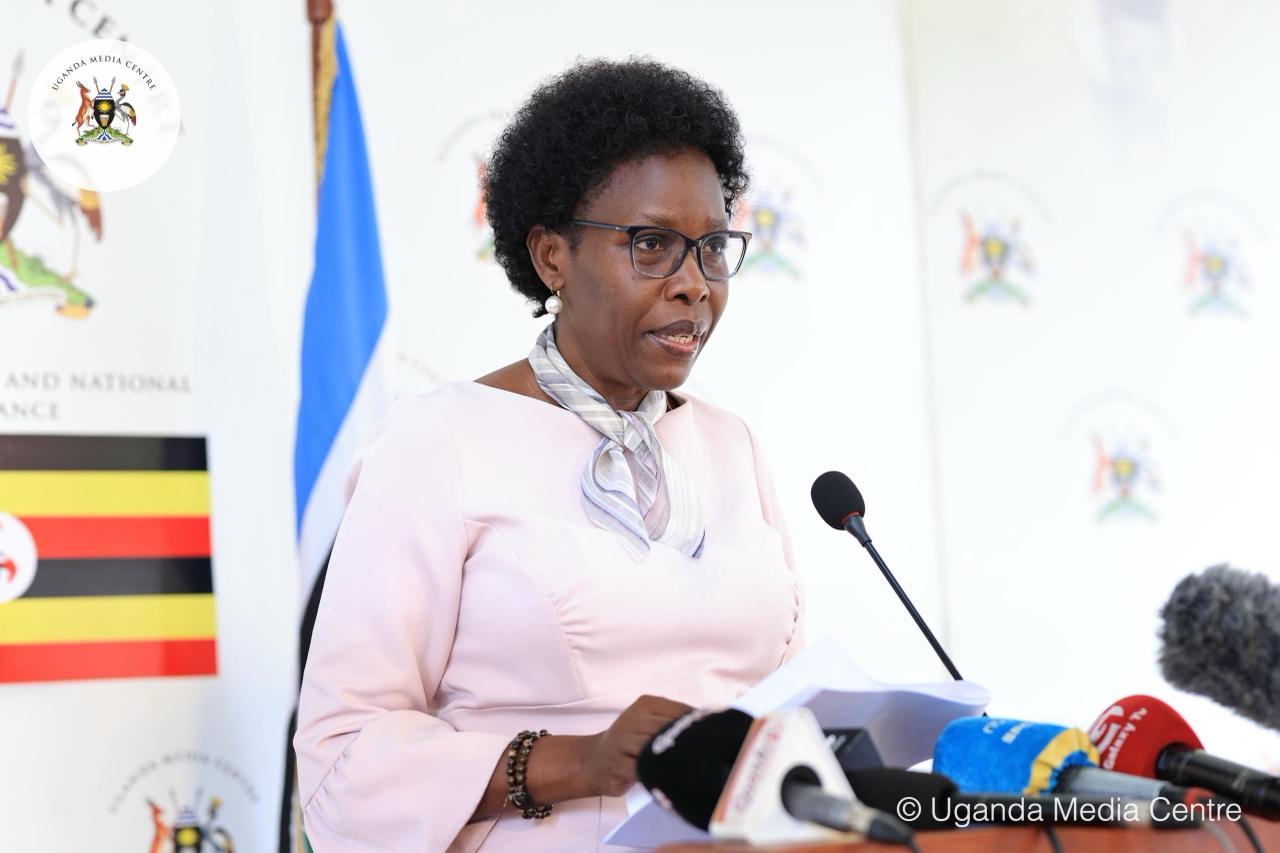
Government has received an approval from the World Bank of $540 million (approx. UGX 2.1 trillion) USD 80M of which is a grant. The funding is for the second phase of the USMID program which will be called UCMID- Uganda Cities & Municipalities Infrastructure Development Program, (UCMID), Lands Minister , Judith Nabakooba , has announced .
Nabakooba ,under whose docket the multi –billion program will be implemented to journalists at the Uganda Media Center , UCMID shall run for a period of 6 years, commencing 2026/2027 to 2030/2031.
The program the Minister said will be implemented within 10 regional cities, 26 municipalities, and 13 refugee-hosting districts; directly benefiting an estimated 5.6 million people of which 1.6 million people are expected to be from within the Refugee hosting areas.
Municipalities are: The 11 which were implementing USMID: Busia, Kitgum, Apac, Tororo, Kamuli, Lugazi, Moroto, Kabale, Ntungamo, Mubende and Kasese.
The new 15 Municipalities coming on board now are: Mityana, Njeru, Bugiri, Rukungiri, Kisoro, Kapchorwa, Iganga, Kotido, Koboko, Sheema, Ishaka-Bushenyi, Ibanda, Kumi, Masindi and Nebbi.
The 13 RHDs are: Arua, Terego, Yumbe, Madi-Okollo, Lamwo, Adjumani, Moyo, Obongi, Kiryandongo, Kamwenge, Isingiro, Kikuube and Kyegegwa.
Jobs Creation :
Nabakooba said that by the time the program is completed in six years at least 20,000 permanent jobs would have been created – including 5,000 in refugees and host communities, through market operations, maintenance services, waste management, and logistics.
“It should also have strengthened infrastructure and better market access will lower business costs, boosting the demand for Labor, and increasing household incomes, especially benefiting women, youth, and low-income groups. An expanded urban infrastructure will also foster a more supportive environment for informal and small businesses, vendors, and traders to succeed,” Nabakooba added.
She noted that Uganda’s regional cities and municipalities are increasingly central to economic transformation, already serving as hubs for trade, services, and manufacturing.
Uganda’s urban population continues to grow- at an approximate 5.2% annually making the country one of the fastest growing in Africa. The urban population is projected to surpass the rural population by 2060.
UCMID therefore, will serve as strategic vehicle to ensure the growth is supported by climate-smart infrastructure, improved service delivery, and job creation.
More than one third of all new jobs created are in cities and towns. Uganda’s Fourth National Development Plan (NDPIV) (2025/26–2029/30) sets ambitious targets for us like: achieving higher household incomes, full monetization of the economy, and creating 2.5 million new jobs. Urbanization is therefore recognized as a critical enabler of these goals, especially for youth and women.
UCMID therefore, the Minister explained , represents the next phase of Uganda’s urban reform agenda, positioning cities and municipalities at the heart of job creation, productivity gains, and economic transformation.
“ By channelling investments through economic corridors, the Program will improve access to regional markets, reduce congestion, lower logistics costs, and enable small and medium enterprises to thrive—particularly those employing youth and women,” she added .
UCMID will also institutionalize reforms that position cities as drivers of Uganda Vision 2040 and Uganda NDP IV by aligning urban growth with a long-term jobs agenda, leveraging private sector participation, and building governance systems that enable continuity and scale.
“Through these reforms, UCMID will: generate immediate construction jobs and create sustainable employment in urban services and operations, stimulate local economies and entrepreneurship—especially for youth, women, and MSMEs, and foster inclusion and skills development for Uganda’s next generation of urban workers.
How the program will be executed ;
UCMID funds will be allocated to the local governments in a formular based on the following Key Pillars:
Pillar One shall be for Urban Roads and Mobility: To promote efficient movement of people and goods, fostering economic development by connecting people to jobs and markets; social inclusion; environmental sustainability; and urban liveability.
Pillar 2 shall be Urban Drainage and Flood Mitigation: To enhance climate resilience by protecting physical and economic assets, lives, and livelihoods in the urban landscapes.
Pillar 3 shall be Nature-based Solutions (NbS) and Green Infrastructure: To promote sustainable and climate-resilient urban development and job creation.
Pillar 4 shall be Sustainable Solid Waste Management: To promote urban resilience through sustainable and climate-smart urban infrastructure and reduction of Green House Gas emissions.
Pillar 5 shall be Economic Development and Job Creation: To promote business development and entrepreneurship, create jobs, boost urban revenues, increase incomes and improve livelihoods.
The program’s results shall be measured through; (i) Enhanced institutional capacity of city, municipal and national institutions for urban management (ii) People in urban areas provided with improved living conditions through access to climate smart infrastructure and services and; (iii)People in urban areas provided with more and better jobs, among others.