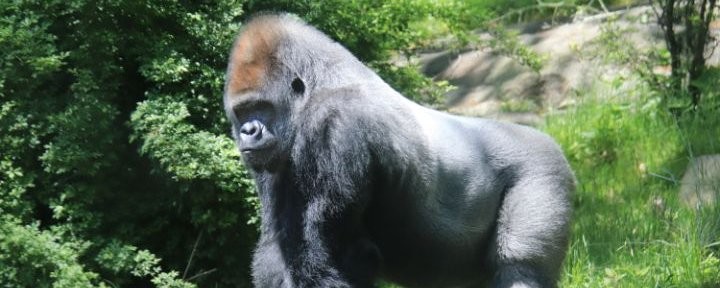
Kerry Washington says she looked a gorilla in Uganda in the face.
Now, Kerry Washington is an accomplished Hollywood actress. I am not. Neither am I a primatologist. But on this particular matter, I am prepared to offer some unsolicited advice:
Don’t try to outstare a silverback. It could cause a Scandal.
Generally, visitors are advised to avoid prolonged direct eye contact and, above all, follow the instructions of the rangers. Among gorillas, a hard stare can be interpreted as threatening.
In our human world, eye contact communicates confidence: “Good morning, Chairman.”
In Bwindi, you might inadvertently be saying: “Chairman, your leadership has failed. I am standing against you.”
And there you are — deep inside Bwindi Impenetrable Forest, manifesto nowhere to be found, challenging a 400-pound incumbent whose campaign team consists of several other gorillas.
Look down. Suddenly discover botany.
That leaf near your shoe? Fascinating.
Yet Kerry’s story is precisely why Uganda should be paying attention.
She visited Uganda while filming The Last King of Scotland and has spoken of feeling remarkably at home here. But it is her encounter with Uganda’s mountain gorillas that stays with her —the extraordinary intimacy of entering their habitat and finding yourself metres away from creatures whose gestures, family relationships and expressions can feel unnervingly familiar.
There is something almost comical about watching them.
A silverback can sit there chewing vegetation with the expression of a government official who has just been informed the meeting could have been an email. The youngsters tumble about. Mothers supervise. Somebody steals somebody else’s food.
You begin wondering who actually came to observe whom.
And that is tourism gold.
Scholar Adam Pérou Hermans Amir has made an important observation: although Africa’s gorillas are famous worldwide, African stories and indigenous knowledge about them remain largely absent from the global narrative.
Uganda possesses both the gorillas and the stories.
Kerry’s viral recollection therefore presents us with another creature worth studying:
Guerrilla marketing.
A Hollywood star voluntarily telling millions of people that Uganda felt like home and recalling an extraordinary gorilla encounter can achieve something no glossy tourism brochure can manufacture: authenticity.
Our neighbours have understood this. Rwanda has deliberately connected gorilla tourism with global celebrities, sport and conservation. Ellen DeGeneres’ involvement with the Dian Fossey Gorilla Fund demonstrates how celebrity affection can mature into a long-term conservation story.
Why shouldn’t Uganda cultivate a similar relationship with Kerry?
Bring her back. Let her rediscover Bwindi Impenetrable Forest. Connect her story with conservation, communities and responsible tourism. Don’t merely celebrate the viral clip for three days and move on to the next WhatsApp sensation.
And the Uganda government shouldn’t carry this load alone.
In 2024, my American friend Andres asked where he should vacation.
I told him: “Uganda.” Visit Uganda.
I made sure he was treated like a prince and sent His Royal Highness to Bwindi. He returned describing the gorilla encounter as an experience to die for.
I recruited one tourist.
Imagine if every Ugandan -at home and abroad -recruited one Andres.
Perhaps that is how we market Uganda: one story, one recommendation, one visitor at a time.
Kerry Washington has already done her part.
The gorillas have been doing theirs for centuries.
The rest of us need to catch up.
And when you finally reach Bwindi and meet the Chairman himself, remember:
Admire him. Photograph him. Tell the world about him.
Just don’t stand there campaigning for his job. And, for heaven’s sake, don’t lock those eyes with the gorilla. You may regret it.
The writer is a Ugandan Public Health Specialist based in the USA