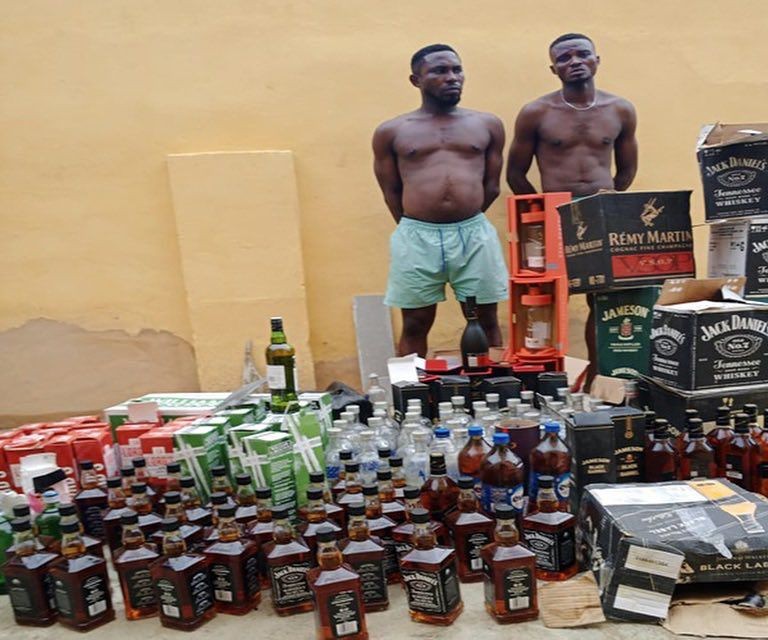
Police in Kawempe Division are holding two men suspected to be behind a backyard operation that manufactured counterfeit premium liquor, including fake Jack Daniel’s, Jameson, Remy Martin and several brands of tequila, in a congested neighbourhood of Kiganda Zone near Kabowa Road in Kawempe, Kampala.
The suspects, identified as Ronald Katongole, 35, and his accomplice Musa Ssebunya, 31, were arrested after a midweek raid on a two-room rental in Kiganda Zone, where officers say they found an improvised alcohol plant concealed behind a row of metal workshops and kiosks.
According to preliminary police findings, the duo is accused of refilling used bottles of well-known foreign brands with dangerous concoctions of industrial alcohol, water, flavours and food colour, before sealing and supplying them to bars and small depots around Kampala as genuine imports.
Investigators further allege that whenever they managed to get their hands on genuine bottles of popular brands, they would first siphon out part of the original liquor and top it up with their own concoctions, which included ethanol purchased from distillers across the country, in order to stretch each bottle and maximise profits.
Residents say Katongole, a familiar face in Kiganda Zone, had long presented himself as a small-scale dealer in “wine and spirits”, often seen moving crates in and out of his premises late in the evening, while Ssebunya handled deliveries on a motorcycle and occasionally supervised loading at odd hours. Few suspected that behind the padlocked door, the two allegedly ran a production line that turned out fake high-end liquor meant to pass as the real thing.
During the operation, detectives recovered dozens of empty and half-filled bottles of popular brands, including labels of Jack Daniel’s Tennessee whiskey, Jameson Irish whiskey and Remy Martin cognac. Officers also found several cartons of assorted spirits branded as premium tequilas like Don Julio, Jose Cuervo and Olmeca, which had been refilled with adulterated liquor and prepared for distribution.
Also seized were bottles labelled as imported vodkas such as Absolut, Smirnoff and Skyy, as well as rum brands resembling Bacardi and Captain Morgan. Police displayed rolls of counterfeit labels, bottle caps and suspected fake tax stamps, which they say were used to give the final product a convincing finish and make it harder for ordinary consumers to tell fake from genuine.
A police source, who is not authorised to speak publicly, said the Kawempe operation was “small in space but big in impact”, adding that the volume of bottles recovered suggested the racket had been running for some time, feeding into Kampala’s busy nightlife economy.
Investigators believe Katongole and Ssebunya collected empty branded bottles from bars, nightclubs and hangouts in Kampala and surrounding areas, paying small amounts to casual workers and bar staff for each bottle.
The bottles would then be washed, dried and lined up on wooden planks acting as makeshift shelves inside the two-room structure, turning the cramped space into an assembly line for fake whisky, cognac, vodka, rum and tequila. The suspects allegedly bought bulk unregulated spirits from informal suppliers, often transported in jerrycans, and mixed them with water, artificial flavours and food colour to mimic the taste and appearance of imported drinks, before blending the mixture with any remaining original liquor where available.
The cheaply made liquid would then be poured into the branded bottles using funnels and siphon tubes, before being sealed with recycled or counterfeit caps, dressed in fresh labels and marked with suspected fake tax stamps to create the impression of having gone through official import and tax processes.
From there, the bottles were reportedly sold to local bars, neighbourhood “wine shops” and middlemen who supplied to drinking spots that market themselves as serving premium imported drinks. Police are now expanding their investigations to trace the supply chain and establish how far the counterfeit bottles travelled, and whether any bar owners knowingly stocked the fake liquor.
Health workers and public safety advocates have raised concern that operations like the one allegedly run by the Kawempe duo are fuelling a hidden health crisis, as unsuspecting Ugandans consume highly unsafe alcohol packaged as reputable brands.
Doctors in Kampala have for years warned of rising cases of acute alcohol poisoning, sudden blindness and organ damage linked to the consumption of adulterated or unregulated spirits. Patients often arrive in critical condition after drinking from bottles they believed were genuine products like Jameson, Remy Martin or imported tequila and vodka, only for tests and investigations to point to toxic mixtures containing dangerous levels of ethanol and, in some cases, methanol.
For low-income consumers, the appeal is the price: a bottle of “Jack Daniel’s” or “Remy Martin” offered at a suspiciously cheap rate in a small bar or village hangout, while for middle-class patrons, the danger often sits unnoticed behind the glow of nightclub lights and well-arranged shelves.
Civil society groups have repeatedly urged authorities to treat illicit and counterfeit alcohol as a serious public health emergency rather than a routine enforcement matter, arguing that every fake bottle that escapes a raid represents potential long-term damage or death for the person who drinks it. They say the Kawempe arrests should be a wake-up call that the problem is not limited to rural sachet gin but extends to glossy bottles dominating shelves in urban bars and lounges.
News of Katongole and Ssebunya’s arrest spread quickly through Kiganda Zone and the wider Kawempe area, where some residents expressed shock while others claimed they had long suspected that “something was not right” with the business. One boda boda rider, who asked not to be named, said he often delivered cartons from the premises to small bars and shops late at night, without being told what was inside.
“We would just be told to take the boxes to a certain place and collect the money,” he said. “You look at the bottles and you see big names like Jack Daniel’s, Jameson, Remy Martin, but the place where they were coming from did not look like a factory.”
A landlord in Kiganda Zone said he was surprised by the scale of the operation, insisting he believed his tenants were running a modest wholesale liquor business. “You see people carrying crates, you hear bottles, and you think it is just a normal store,” he said. “We did not know they were making fake things inside.” Local leaders have called on law enforcers and regulators to intensify inspections of small liquor outlets and storage facilities, especially in densely populated suburbs like Kawempe, where informal businesses are easy to conceal.
The Kawempe incident comes at a time when reports suggest a large portion of the alcohol consumed in Uganda either escapes formal regulation or is outright illicit, raising questions about the effectiveness of current enforcement mechanisms and the adequacy of consumer protection.
Analysts say Uganda needs a multipronged approach that tightens control over import channels and tax stamps, improves surveillance of production and distribution networks, and empowers consumers with information to recognise suspicious products, including unusually cheap bottles of global brands such as Jack Daniel’s, Jameson, Remy Martin and well-known tequilas.
They argue that as long as counterfeit liquor remains easy to manufacture and highly profitable, more operators will be tempted to follow in the footsteps of the Kawempe duo. Public health experts are also urging government agencies to work closely with hospitals, local councils and community organisations to monitor health trends, document cases of suspected alcohol poisoning and promptly trace their sources.
Meanwhile, police say Katongole and Ssebunya will be charged in court as soon as investigations are complete, and their alleged backyard plant in Kiganda Zone stands as a stark reminder of how easily deadly concoctions can find their way into ordinary Ugandans’ glasses, hidden behind shiny imported labels and the promise of a good time.